We are very happy to be representing Uberto and his alt pop for lost souls. His imagination is extravagant, his attention to detail is exacting, and he somehow is an amazing at business too. A personality we are thoroughly enjoying getting to know! 🙏
We know a little of what awaits you, which makes this introduction particularly satisfying. The music will give you a first impression, but we certainly look forward to your thoughts on the whole concept that will be soon brought to your attention... 👀
TWO SEPARATE DOCUMENTS EXPLAINING OUR ARTIST DEVELOPMENT APPROACH, METHODOLOGY AND CASE STUDY EVIDENCE.
At UAC Management, we have developed and published two complementary materials that explain our work from different angles. They are related, but they are not the same document and they serve different purposes.
The first is our Strategy Concept. It presents the structure of our services, objectives, approach, phase configuration, content development, audience transformation and execution model. It is the clearest overview of how we organise and deliver our work.
The second is Methodology: An Empirical Analysis. It examines the operational framework behind that work, including audience consolidation, algorithmic optimisation, empirical findings and applied case studies. It provides the analytical and documented case-study context rather than a general services overview.
We have not written either document as a fixed formula for success. Music careers do not develop in identical conditions, and no management process can control audience decisions, platform behaviour, market conditions or external opportunities. We use these materials to give artists and their teams a clearer way to assess the present position, decide what needs attention, coordinate activity and review what the work is actually producing.
The two documents should therefore be read separately and together: the Strategy Concept explains the structure of our approach, while the Methodology examines the operational reasoning and evidence behind it.
WHY ARTISTS NEED A DEFINED PROCESS
Most stalled campaigns are not caused by a lack of activity. They are caused by activity that does not connect.
A release can have a date, artwork, social posts and a short promotional push, yet still leave the artist with no clearer sense of who the release reached, what the audience did next or what should change before the next campaign. The same problem appears when creative decisions, public communication, content production, live activity and business planning are treated as separate jobs rather than parts of one career direction.
A defined artist development process helps bring those decisions into the same frame. It asks practical questions: What is the artist trying to build? Which audience is most relevant at this stage? What material and capacity are actually available? What should a release lead toward? Which relationships, assets or systems need to exist before the next level of activity makes sense?
That does not make the work less creative. It gives creative work a stronger operational setting. An artist can protect identity while making clearer decisions about timing, content, public language, audience development and professional follow-through.
OUR WORKING PHILOSOPHY IS BUILT AROUND THE ACTUAL PROJECT
We tailor our approach to the artist or music professional rather than applying a generic campaign template. We begin with a realistic assessment of the current situation: the artistic profile, existing material, public presentation, audience behaviour, release history, market context and practical resources.
From there, we connect artistic identity with a workable set of business decisions. That may mean clarifying positioning before a release is scheduled, rebuilding the content process around a realistic rhythm, strengthening the basic materials needed for outreach, or deciding that a defined service is more appropriate than full representation.
Our underlying principles are straightforward:
strategy should be adapted to the artist’s actual capacity, direction and objectives;
planning needs clear priorities, responsibilities and review points;
communication works best when assumptions can be discussed early;
content and public positioning should support the project rather than imitate a passing trend;
audience attention matters most when there is a respectful, relevant path for people to remain engaged;
commercial and creative decisions need to be coordinated rather than left to contradict each other.
These principles are not unusual in serious music management. Their importance comes from applying them consistently when a campaign is under pressure, assets are delayed, a release changes shape or a promising opportunity needs to be evaluated quickly.
HOW WE MOVE FROM ASSESSMENT TO LONG-TERM DEVELOPMENT
We present the methodology as a progression rather than a single promotional event. In practice, the stages overlap, but each has a distinct purpose.
1. INITIAL ASSESSMENT AND CURRENT-POSITION ANALYSIS
We start with a diagnostic review of the artist’s creative profile, career trajectory, market position and immediate challenges. We use this stage to identify the gap between the current position and the stated objectives, then agree which indicators and review points are relevant for the work ahead.
For one project, that might be a release planning problem. For another, it might be unclear branding, inconsistent communication, limited content assets, weak follow-through after exposure or a lack of coordination between different collaborators.
2. POSITIONING, OBJECTIVES AND RELEASE ARCHITECTURE
Once the current position is understood, we establish what the work is trying to achieve. Our Strategy Concept sets out a strategy and implementation plan that can include market research, a content roadmap, release timing, live-event planning and a distinct public profile.
The useful question is not simply how to create more visibility. It is what kind of visibility is relevant, what the artist wants that attention to lead toward and whether the team can support the next step once the release becomes public.
A release architecture can therefore cover the sequence of music, assets, content capture, distribution preparation, media outreach, audience communication, live opportunities and post-release review. It is a way of making the campaign cumulative, so that one piece of work can inform the next rather than disappearing when the release window closes.
3. CONTENT, COMMUNICATION AND AUDIENCE DEVELOPMENT
Content development is not only a question of frequency. It involves deciding what a project needs to communicate, which formats suit the material, where the artist’s time is best spent and how the audience is invited to take a relevant next step.
Our Strategy Concept refers to coherent visual presentation, digital assets, promotional content, fan engagement and direct communication channels. In practical terms, this means designing a clearer relationship between the content someone sees and the action that makes sense next: listening to a release, following an artist profile, joining a direct channel, attending a show or returning to the catalogue.
Direct fan relationships matter because social visibility can be temporary. Artists benefit from retained attention, repeat engagement and communication with people who have already shown genuine interest. Automation can assist where it makes a response timely and relevant, such as delivering a requested link or inviting an interested listener to a broadcast channel. It is not a substitute for artist participation, judgment or community management.
4. IMPLEMENTATION, MEASUREMENT AND ADJUSTMENT
We complete the process through execution and review. We group the work around four operational pillars:
Planning and strategic alignment – market research, content roadmaps, release timelines and live-event planning.
Content production and execution – music, brand development, digital assets and collaboration setup.
Distribution and promotion – distribution strategy, digital marketing, media outreach and fan engagement.
Performance analysis and optimisation – data tracking, campaign adjustments, collaboration review and growth planning.
These areas need each other. A well-produced asset has limited value if it arrives too late for the release plan. A media or audience opportunity is harder to use when the artist profile, materials or communication path are unclear. Performance data is useful only when the team can interpret it in relation to the original objective and make a grounded adjustment.
Our Strategy Concept also outlines an implementation rhythm that begins with a kickoff discussion, moves through agreed ongoing and fixed deliverables, and ends with review and preparation for the next period. The specific timetable must match the project, but the principle is valuable: strategy should be revisited in the course of the work rather than treated as a document that is written once and ignored.
WHAT THE METHOD LOOKS LIKE IN DOCUMENTED CAMPAIGNS
Our Methodology Case Study records results from specific campaigns, timeframes and territories. The figures below are drawn from that internal documentation. They are not predictions, universal benchmarks or promises for future artists. Every project is affected by the quality of the material, audience fit, release history, timing, budget, territory, team capacity and the artist’s own participation.
CONVERTING VISIBILITY INTO A DEEPER STREAMING RELATIONSHIP
One documented 12-month UK campaign began with a disconnect between social visibility and streaming behaviour. The work focused on a content system, audience-funnel architecture and direct navigation from engaged social users toward the artist’s streaming profile.
In our internal case study, the campaign recorded 30.9 million content views, 1.4 million Spotify streams and 205,000 listeners, alongside a seven streams-per-listener ratio and 33.4 per cent growth in Spotify followers. The relevant lesson is not that large content reach automatically produces streaming results. It is that the relationship between attention and the next action needs to be designed, monitored and revised.
BUILDING MOMENTUM THROUGH A MULTI-RELEASE SEQUENCE
A separate nine-month UK campaign used eight sequential releases supported by release planning, content, media activity and streaming strategy. Our internal documentation records 500,000 Spotify streams during the campaign period, 276,790 listeners, 10 official Spotify playlist placements, 250 press features and 160 official radio plays.
Those figures belong to one documented campaign, not a standard outcome. The broader point is that a release sequence can be planned so that each campaign has a reason to build on the materials, learnings and audience attention created by the previous one. Catalogue momentum is more useful when it is supported by a credible rhythm of new work and follow-through.
ALIGNING INTERNATIONAL DEVELOPMENT WITH LIVE ACTIVITY
An international-market campaign combined territory-specific outreach, release planning and live development over a 24-month period. Our internal case study records 51 performances in Japan, 110 press features and a 47 per cent traction increase per release over the documented timeframe.
This example illustrates the importance of local context. International activity cannot be reduced to a single outreach list or a generic digital campaign. Media, release timing, audience behaviour, practical travel considerations and live opportunities need to be considered together. The documented result reflects the circumstances of that campaign and should not be read as an assurance of comparable access or outcomes elsewhere.
COMMUNICATION AND SHARED RESPONSIBILITY
A methodology can create structure, but it cannot replace the working relationship.
Sustained artist development depends on timely communication, accurate information, delivery of agreed music and assets, realistic planning, willingness to discuss concerns and openness to review. The artist or project needs to be present in the work. Management can coordinate, advise, organise, negotiate and help set priorities, but it cannot make decisions for an audience, compel third parties to respond or compensate for a complete lack of participation.
This is why the strongest management relationships tend to make responsibilities visible. Everyone should understand who is preparing assets, who approves communication, which deadlines matter, how changes are raised and what happens when plans need to be adjusted. Accountability is not administrative decoration. It protects the quality of the creative and commercial work.
LONG-TERM DEVELOPMENT IS NOT A SHORT-TERM SPIKE
A sudden increase in views, listeners or followers can be useful. It can also be temporary. On its own, it does not tell an artist whether the public profile is becoming stronger, whether people are returning to the music or whether the next release will begin from a better position.
Long-term artist career development is built through repeated activity, stronger materials, clearer positioning, relevant audience retention and a more dependable professional infrastructure. It also requires the confidence to learn from results that are less dramatic: which content prompted genuine response, which message confused the audience, where the workload became unrealistic and what needs to change before the next campaign.
The goal is not constant acceleration. It is a more informed and sustainable music career, with artistic identity intact.
HOW WE STRUCTURE UAC MANAGEMENT ENGAGEMENTS
The Strategy Concept distinguishes ongoing work from time-specific projects. That distinction is useful for artists deciding what kind of support they actually need.
PERCENTAGE-BASED MANAGEMENT AND REPRESENTATION
For conventional management services and representation, our principal model is percentage-based where applicable. Compensation is connected to income generated during the management relationship, according to the terms agreed in the management contract.
Traditional management can involve strategic planning, communication, negotiations, coordination, decision-making, relationship development, release support and ongoing guidance. A percentage-based arrangement can reduce the need to treat every conversation or task as a separate invoice, while creating a shared financial relationship around the activity being developed.
A percentage does not purchase guaranteed results, access to labels, tours, playlists, press coverage, partnerships or other third-party outcomes. It compensates the agreed management and representation work. What external companies, platforms, promoters, journalists and audiences decide remains outside any manager’s control.
DEFINED RECURRING SERVICES
Some artists need professional support outside the conventional scope of ongoing management or representation. We may offer an agreed recurring-fee structure for defined services, depending on the brief and available capacity.
Those services can include social-media management, content development, design support, community management, campaign administration, marketing coordination, website or digital-asset support and other clearly agreed specialist work. The recurring fee is for the defined deliverables and workflow, not for access to management opportunities.
A sound agreement should identify what is included, what falls outside scope, how requests are prioritised, how revisions are handled, how communication works and how additional work is approved. If career representation is also relevant, it should be discussed and contracted separately.
WHO THIS APPROACH MAY SUIT
A structured artist development process can be useful to emerging independent artists, bands entering a serious development phase, more established projects seeking clearer coordination, producers and mixers strengthening their professional positioning, and artists preparing a sequence of releases. It can also help projects that need a specific professional service rather than full management.
Management is not automatically the right next step for every artist or every stage. Sometimes the priority is better music, clearer positioning, stronger assets, a more regular creative rhythm or one focused service. An honest assessment should be able to identify that difference.
CHOOSING A MUSIC MANAGER: PRACTICAL QUESTIONS TO ASK
Before entering a management or service relationship, an artist should be able to answer the following questions clearly:
What is the exact scope of the relationship, and what is not included?
What does the artist need to provide, approve or deliver?
How will communication, feedback and decisions be handled?
What are the immediate priorities, and how will they be reviewed?
What level of commitment and time is required from both sides?
How are costs, percentage arrangements and additional work defined?
Which outcomes depend on third parties, timing, budgets or audience response?
How will disagreements, delays or changed plans be addressed?
Does the working style fit the artist’s goals, capacity and personality?
These questions are not obstacles to a partnership. They are part of building one that is professionally clear from the beginning.
DOWNLOAD OUR STRATEGY CONCEPT
Our full current Strategy Concept presents our services, objectives, approach, phase configuration, content development, audience transformation and execution model in more detail.
Our separate Methodology: An Empirical Analysis document examines the operational framework, audience consolidation, algorithmic optimisation, empirical findings and applied case studies behind our work.
If you are assessing whether you need management, a defined service or a clearer independent process, our About page, testimonials and Hristo Penchev’s Artist Development Essentials provide further context. For a considered conversation about a specific project, contact us.
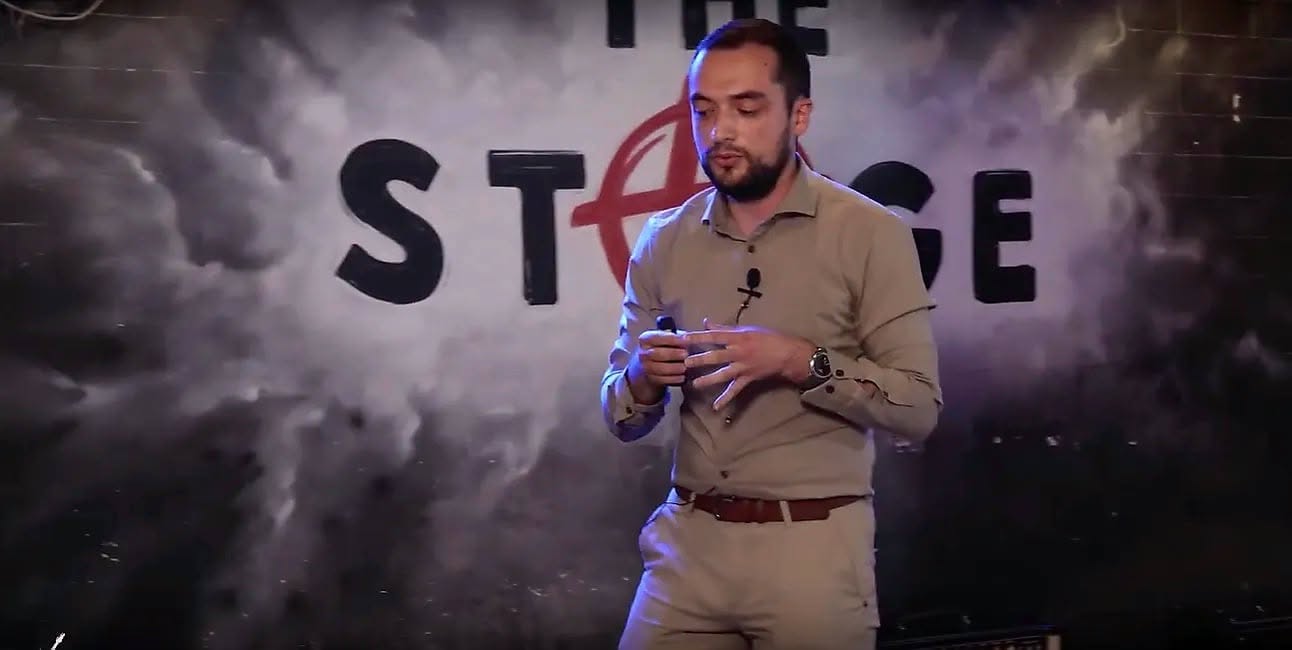
Hristo Penchev, the founder of UAC Management, was delighted to receive the invitation to participate in Rockschool's Music Accelerator program as a mentor and lecturer. As an annual event, supported nationally, the Music Accelerator provides the opportunity for a number of chosen participants to professionally record music, and videos with information from renowned industry participants completely for free.
Considering the nature of the event, he wanted to cover a topic that has become more and more problematic within the industry. The tendency for artists is to allow impatience to drive them to attempt to skip the process of self-development, neglecting its importance, and instead focusing on the technicalities of the business. This results in the overall failure of the industry's current model and its participants to establish successful and sustainable activity.
Daily people concentrate on their subjective perceptions, not even willing to consider applying critical and rational thinking to their decision-making process, ultimately acting on emotions, rather than facts and objective thoughts. This not only leads to missed opportunities for growth and development, but establishes an immoral, disrespectful, ungrateful and toxic mentality, that ultimately ruins all chances for developing well-performing and reputable, long-term activity within the industry.
Hence, with Hristo's "The Essence Of The Music Business" lecture, he wanted to bring awareness and shed light on this aspect of the music industry, as he talked about the significance of the self-reflection process, not just as a musician, but as a human being. The ability to designate decisions to the applicable thought dynamic, the objective and crucial relevance of being professional and moral, questioning instinctive reactions when it comes to making choices and numerous other aspects of the topic surrounding understanding how you will never be a successful musician if you are not a reasonable person, who is focused on self-development as well.
You can purchase “Artist Development Essentials: The Key to Structuring a Sustainable Profile in the Music Industry” (available everywhere): https://www.amazon.com/Artist-Development…/dp/1948198827
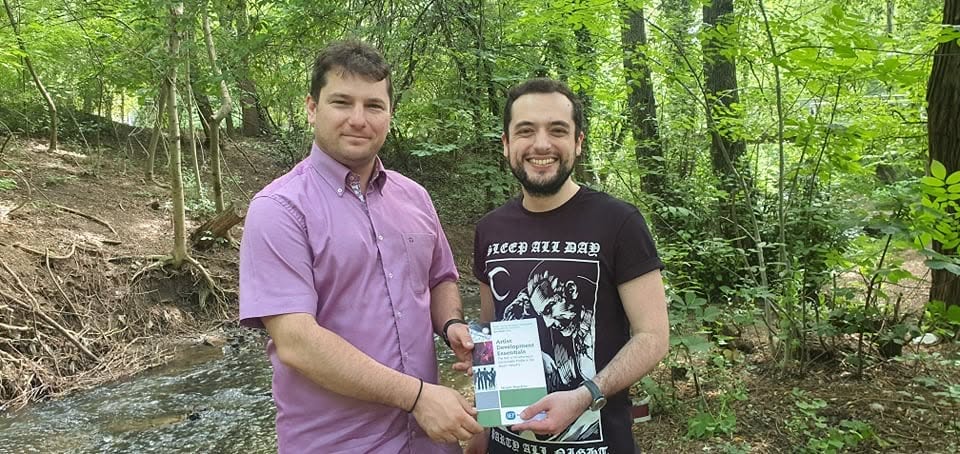
The owner and founder of UAC Management – Hristo Penchev – had the pleasure to present and showcase the missive and the meaning behind his book – “Artist Development Essentials: The Key to Structuring a Sustainable Profile in the Music Industry”, the concept behind his professional expertise, his thoughts and outlook on the music business and the mental model, which he believes should be utilized in the industry in the process of developing and sustaining a successful activity in the niche in a beautiful, natural setting in the interview that he was invited to do for the great Luboslovie!
Purchase “Artist Development Essentials – The Key To Structuring a Sustainable Career in the Music Business”, now available everywhere: https://www.amazon.com/Artist-Development…/dp/1948198827
Today marks another significant accomplishment added to our company’s resume! UAC Management’s owner and founder – Hristo Penchev – is officially an author! “Artist Development Essentials – The Key To Structuring a Sustainable Career in the Music Business” is the book that contains Hristo’s based on experience and expertise outlook on the mentality that should be developed in the process of achieving and generating sustainable results in the music business, the distinguishable components and features forming the current state of this industrial niche, the operational methodologies and tendencies, which navigate the direction of the entertainment business nowadays, the significance of properly adjusting your professional approach to an innovative-driven mentality, the best practices to develop your personal and professional profile in order to ensure success and many, many other topics relevant to the key features and aspects of the process of constructing a well-operating profile in this business nowadays. Surely, a material that can drastically and significantly improve the progress of a talent nowadays, make sure to purchase this book or show it someone who might need some practical, easy to comprehend knowledge about establishing a well-operating activity in this field.
Purchase “Artist Development Essentials – The Key To Structuring a Sustainable Career in the Music Business”, now available everywhere: https://www.businessexpertpress.com/…/artist…/
We use cookies to optimise our website and our service.
Functional
Always active
The technical storage or access is strictly necessary for the legitimate purpose of enabling the use of a specific service explicitly requested by the subscriber or user, or for the sole purpose of carrying out the transmission of a communication over an electronic communications network.
Preferences
The technical storage or access is necessary for the legitimate purpose of storing preferences that are not requested by the subscriber or user.
Statistics
The technical storage or access that is used exclusively for statistical purposes.The technical storage or access that is used exclusively for anonymous statistical purposes. Without a subpoena, voluntary compliance on the part of your Internet Service Provider, or additional records from a third party, information stored or retrieved for this purpose alone cannot usually be used to identify you.
Marketing
The technical storage or access is required to create user profiles to send advertising, or to track the user on a website or across several websites for similar marketing purposes.